Question 1 State the difference between prokaryotic and eukaryotic cell?
Question 2 What are prokaryotes. Give example?
Question 3 what are eukaryotes. Give example?
Prokaryotic cells
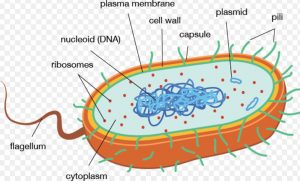
The cell having nuclear material without a nuclear membrane around it, are called prokaryotic cells.
The organism made of prokaryotic cells are called prokaryotes.
1)The nucleus of prokaryotic cell is not well organised.
2)There is no nuclear membrane around the nuclear material in the prokaryotic cells.
3)The nuclear material is in direct contact with the cytoplasm.
4)All the prokaryotes are simple, unicellular organism.
5)They were probably the first living things to evolve on the earth.
For Ex: Bacteria, blur green algae are prokaryotes.
Eukaryotic Cells
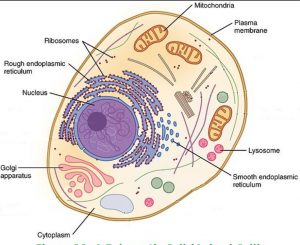
The cells having nuclear material enclosed by a nuclear membrane are called eukaryotic cells.
The organism whose cells possess a nucleus bound by a nuclear membrane are called eukaryotes.
1)They have proper, well organised nucleus.
2)The nuclear membrane in eukaryotic cell is not in direct contact with cytoplasm, it is separated from cytoplasm by the nuclear membrane.
For Ex: Amoeba, cheek cell, onion peel cell , plants, animals, protozoa, fungi etc.